
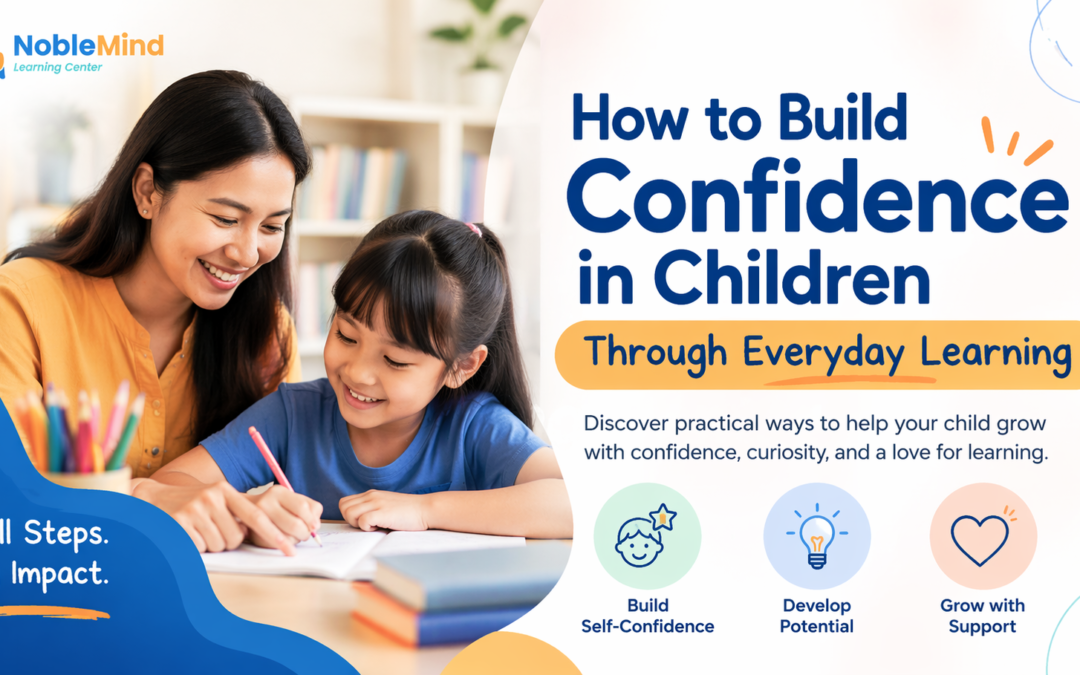
Confidence plays a crucial role in a child’s development, both academically and emotionally. A confident child is more willing to try, more resilient when facing challenges, and more open to learning new things. On the other hand, a lack of confidence can make even simple tasks feel overwhelming.
Many parents assume that confidence is something children are naturally born with. In reality, confidence is built over time through experiences, support, and the right environment.
If your child often says things like “I can’t do it,” avoids challenges, or gives up easily, it may be a sign that they need more support in building their confidence.
The good news is that confidence can be developed, and as a parent, you play a key role in shaping it.
Why Confidence Matters in Learning
Confidence is closely connected to how children approach learning. When children believe in their abilities, they are more likely to participate, ask questions, and stay engaged.
A confident child tends to:
- Try new things without fear
- Stay focused longer
- Handle mistakes better
- Develop problem-solving skills
In contrast, children with low confidence often:
- Avoid difficult tasks
- Fear making mistakes
- Lose focus quickly
- Depend heavily on others
This is why building confidence is not just about emotional well-being, but also about improving how children learn.
What Causes Low Confidence in Children
Understanding the root of low confidence helps you respond in a more supportive way.
Some common causes include:
Negative past experiences
If a child has experienced repeated failure or criticism, they may start believing they are not capable.
Constant comparison
Comparing a child to siblings or peers can make them feel inadequate.
High pressure
Unrealistic expectations can create fear instead of motivation.
Lack of encouragement
Children need recognition and support to feel valued.
Learning difficulties
Struggling to understand lessons can lower self-esteem.
Confidence is shaped by everyday interactions, which means small changes in how you respond can have a big impact.
Encourage Effort, Not Just Results
One of the most effective ways to build confidence is by focusing on effort rather than outcomes.
Instead of saying:
“You got everything right, good job”
Try saying:
“I can see you worked really hard on this”
This shift helps children understand that effort matters more than perfection.
When children feel that their effort is valued, they become more willing to try again, even when things are difficult.
Normalize Mistakes as Part of Learning
Many children lose confidence because they are afraid of making mistakes.
As a parent, you can help change this mindset by treating mistakes as a natural part of learning.
You can:
- Share your own mistakes and what you learned from them
- Encourage your child to try again instead of giving up
- Avoid reacting negatively when they get something wrong
When children feel safe making mistakes, they become more confident in exploring and learning.
Give Children Small, Achievable Challenges
Confidence grows through success, but success does not have to be big.
Start with small, achievable tasks that your child can complete independently.
For example:
- Solving a few questions instead of an entire worksheet
- Reading a short paragraph instead of a full page
- Completing one step at a time
Each small success builds a sense of capability.
Over time, these small wins create a strong foundation of confidence.
Allow Independence and Decision-Making
Children build confidence when they feel capable of doing things on their own.
As parents, it can be tempting to help too much, but over-supporting can limit their growth.
Encourage your child to:
- Make simple decisions
- Try solving problems before asking for help
- Take responsibility for small tasks
Even if they make mistakes, the experience helps them learn and grow.
Confidence comes from doing, not just being told.
Create a Safe and Supportive Environment
A child’s environment plays a major role in shaping their confidence.
Children need to feel:
- Safe to express themselves
- Supported when they struggle
- Encouraged when they try
You can create this environment by:
- Listening without judgment
- Being patient with their progress
- Showing appreciation for their efforts
When children feel emotionally secure, they are more willing to take risks and try new things.
Use Positive and Supportive Language
The way you speak to your child can influence how they see themselves.
Avoid labels like:
“You’re lazy”
“You’re not good at this”
Instead, use language that supports growth:
“You’re still learning”
“Let’s figure this out together”
Positive language helps children develop a growth mindset, where they believe they can improve with effort.
Be Consistent with Encouragement
Confidence is not built in one day. It develops through consistent support over time.
Make it a habit to:
- Recognize small improvements
- Encourage effort regularly
- Stay patient during setbacks
Consistency creates stability, and stability helps children feel more secure in their abilities.
Recognize Each Child’s Unique Strengths
Every child is different. Some may excel academically, while others shine in creativity, communication, or problem-solving.
Instead of focusing only on weaknesses, take time to identify and nurture your child’s strengths.
This helps them:
- Feel valued
- Build self-belief
- Develop a positive identity
Confidence grows when children feel good about who they are.
When Confidence Needs Extra Support
In some cases, children may need additional support to build confidence.
You may consider seeking help if your child:
- Avoids most challenges
- Shows strong fear of failure
- Has ongoing low self-esteem
- Struggles both academically and emotionally
A structured and supportive learning environment can help address these challenges more effectively.
Helping Your Child Grow with Confidence
Building confidence is one of the most valuable things you can do for your child.
It is not about making them perfect, but helping them believe in their ability to learn, grow, and overcome challenges.
By encouraging effort, creating a supportive environment, and giving them opportunities to succeed, you are helping your child develop skills that will benefit them for life.
Confidence affects not only academic success, but also how children handle relationships, challenges, and future opportunities.
Need Guidance for Your Child’s Development?
If you’re unsure how to support your child’s confidence and learning development, getting the right guidance can make a meaningful difference.
At NobleMind, we focus on helping children:
- Build confidence in a supportive environment
- Develop effective learning habits
- Grow academically and emotionally
- Learn in a way that suits their individual needs