
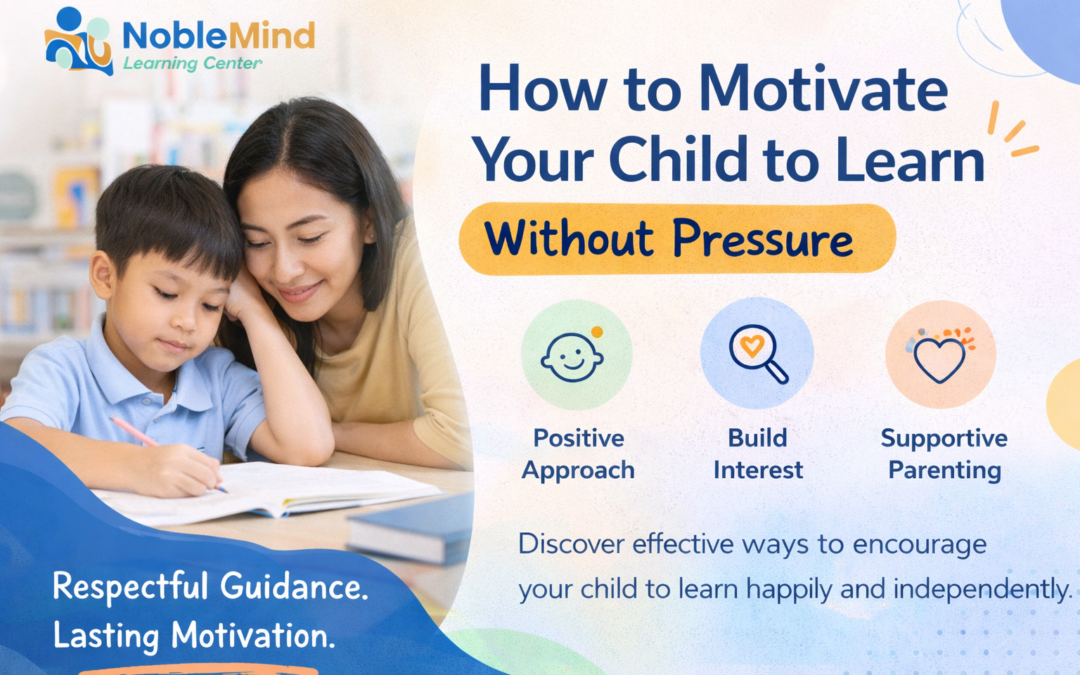
Many parents want the best for their children. You want them to do well in school, stay focused, and build a strong foundation for the future. But in the process, it’s easy to fall into a common challenge — pushing too hard.
You may have experienced moments like this. You remind your child to study, but they resist. You try to help, but they lose interest. You encourage them to do better, but instead of improving, they become more frustrated.
It can feel confusing and even exhausting.
The truth is, motivation cannot be forced. When children feel pressured, they are more likely to shut down rather than step up.
The good news is that children can become motivated learners — not through pressure, but through the right approach, environment, and support.
Why Pressure Often Backfires
It’s natural to think that pushing children will help them improve. However, too much pressure can create the opposite effect.
When children feel pressured, they may:
- Develop anxiety around learning
- Fear making mistakes
- Lose interest in studying
- Become dependent on external rewards or approval
Instead of enjoying the process of learning, they begin to see it as something stressful.
Over time, this can damage both their confidence and their relationship with learning.
Understand What Motivates Your Child
Every child is different, and motivation looks different for each of them.
Some children are motivated by:
- Curiosity and interest
- Recognition and praise
- A sense of achievement
- Feeling understood and supported
Take time to observe your child. What excites them? What makes them lose interest? What kind of encouragement works best?
When you understand what drives your child, it becomes easier to guide them in a way that feels natural.
Focus on Building Interest, Not Just Discipline
Discipline is important, but interest is what sustains motivation.
If a child finds something interesting, they will naturally pay more attention and stay engaged longer.
You can build interest by:
- Connecting lessons to real-life situations
- Using stories, visuals, or examples
- Allowing your child to explore topics they enjoy
For example, if your child likes animals, you can incorporate reading or math activities related to animals.
Learning becomes more meaningful when it feels relevant.
Replace Pressure with Encouragement
There is a big difference between pressure and encouragement.
Pressure sounds like:
“You have to get this right”
“Why can’t you do this properly?”
Encouragement sounds like:
“You’re improving, keep going”
“Let’s try this together”
Encouragement creates a safe space for children to try, fail, and try again.
When children feel supported, they are more willing to put in effort.
Set Realistic and Achievable Expectations
Sometimes, children lose motivation because expectations feel too high.
If a task feels too difficult, they may give up before even trying.
Break tasks into smaller, manageable steps:
- Instead of finishing all homework, start with one section
- Instead of mastering a topic, focus on understanding one concept
Achievable goals create a sense of progress, and progress builds motivation.
Give Children a Sense of Control
Children are more motivated when they feel they have some control over their learning.
You can:
- Let them choose the order of tasks
- Give options (study now or after a short break)
- Involve them in setting goals
This doesn’t mean giving complete freedom, but allowing small choices that make them feel involved.
When children feel ownership, they are more likely to stay engaged.
Limit Overuse of Rewards
Rewards can be helpful, but relying too much on them can reduce internal motivation.
If children only study to get rewards, they may stop putting in effort when the rewards are removed.
Instead of focusing on rewards, emphasize:
- Personal progress
- Effort
- Satisfaction from completing tasks
You can still use rewards occasionally, but they should not be the main driver.
Be a Positive Role Model
Children learn a lot by observing their parents.
If they see you:
- Being patient
- Staying consistent
- Showing curiosity
- Handling challenges calmly
They are more likely to adopt similar behaviors.
Your attitude toward learning can influence how your child feels about it.
Create a Consistent but Flexible Routine
Routine helps children know what to expect, which reduces resistance.
However, the routine should not feel rigid or stressful.
A good balance is:
- Consistent study time each day
- Flexibility when needed
- Short and focused sessions
This creates structure without overwhelming your child.
Recognize Emotional Needs
Sometimes, lack of motivation is not about learning at all.
Your child may be:
- Tired
- Stressed
- Overwhelmed
- In need of attention
Before focusing on performance, take a moment to check in emotionally.
A simple question like:
“How are you feeling today?”
Can make your child feel heard and supported.
When emotional needs are met, motivation becomes easier.
Be Patient with the Process
Motivation is not something that changes overnight.
There will be ups and downs, and that’s completely normal.
What matters is:
- Consistency in your approach
- Patience during difficult moments
- Continued support
Even small improvements are meaningful.
Over time, your child will develop a more positive relationship with learning.
When Your Child Needs More Support
If your child continues to resist learning despite your efforts, it may be a sign that they need a different approach.
You may consider additional support if your child:
- Shows strong resistance to studying
- Becomes easily frustrated
- Avoids learning tasks consistently
- Has difficulty understanding lessons
In these situations, a more structured and personalized method can help your child regain confidence and motivation.
Supporting Your Child Without Pressure
Every parent wants their child to succeed, but success does not come from pressure.
It comes from understanding, encouragement, and the right environment.
By shifting your approach from pushing to guiding, you help your child:
- Feel more confident
- Stay engaged in learning
- Develop long-term motivation
Learning should not feel like a burden. It should feel like a journey that your child is supported in, not forced through.
Need Guidance for Your Child?
If you’re unsure how to motivate your child or feel that your current approach is not working, you’re not alone.
At NobleMind, we help children:
- Build motivation naturally
- Develop confidence in learning
- Improve focus without pressure
- Learn in a way that suits their needs